
Homicide Squad: New York Cases
G5 EntertainmentAdventure
4.521.19K Reviews
- Version
- 2.36.6900
- Installs
- 5.00M
- Age Rating
- Teen
Screenshots


Our Review of Homicide Squad: New York Cases
 Analysis by Appyee
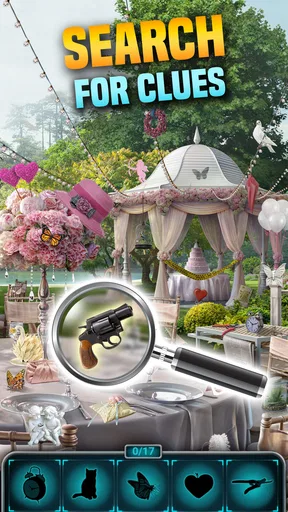
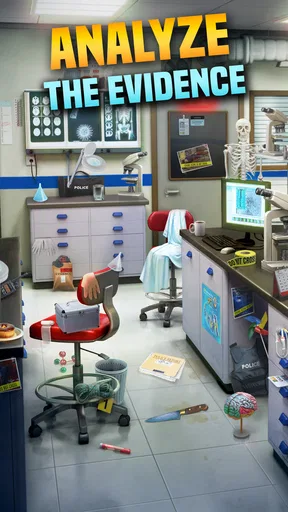
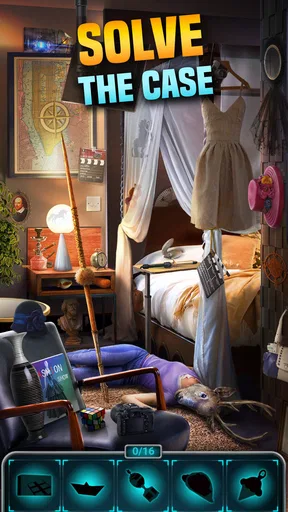
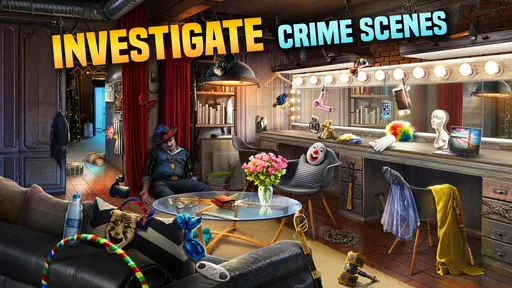
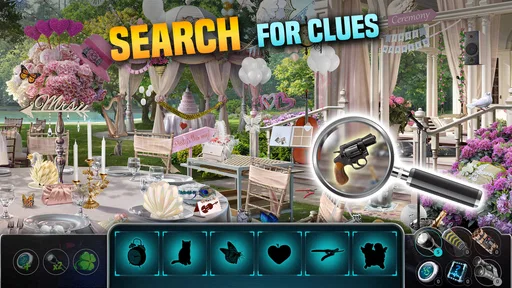
I spent time with Homicide Squad: New York Cases as a story-driven adventure game built around investigations rather than fast reflexes. The basic idea is simple: examine crime scenes, search for clues, find hidden objects, match gems, and use what you uncover to move cases forward. What makes it appealing is the change of pace between observation, deduction, and small puzzle challenges. I found it easiest to enjoy when I treated each case as a short mystery session instead of expecting a nonstop action game.
Developed by G5 Entertainment, the game is free to start and aimed at a Teen audience. It has built a substantial player base, with more than five million installs, a 4.5 average from roughly 246 thousand ratings, and about 21 thousand written reviews. Those figures suggest that the central investigation formula has broad appeal, but they do not remove the need to understand its rhythm. This is a game for people who like looking carefully, remembering details, and returning to a case later—not for anyone seeking a traditional open-world detective adventure.
How the investigation feels in everyday play
I find the most useful way to judge Homicide Squad is to follow what a normal play session asks of me: notice a detail, act on it, and see whether the case gives me a satisfying reason to continue. That makes the game’s fit clearer than focusing only on its detective theme. I’ll also look at how the shift from searching to gem puzzles changes the pace and makes a natural stopping point.
A measured pace that rewards attention
The first thing I noticed is that the game’s speed is mostly determined by the player. You are not constantly racing through a timed action sequence. Instead, progress depends on how quickly you recognize useful objects, understand what a scene is asking you to do, and decide whether to spend time searching more carefully. That makes it comfortable for short breaks, especially when I wanted something more involving than a basic match game but less demanding than a large role-playing title.
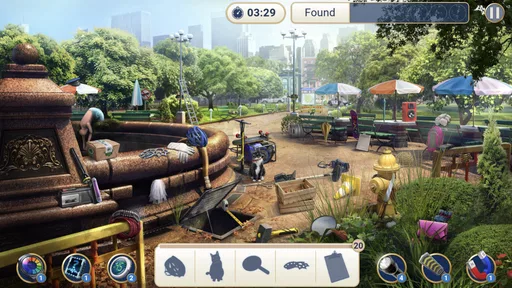
Searching scenes can feel quick when the object list is familiar and the visual layout is clear. It slows down naturally when several items blend into the background or when I approached the scene without a plan. That slower pace is part of the appeal, although it can also become frustrating if I was tired or playing on a small screen. The game is at its best when I gave myself permission to inspect the scene rather than tapping randomly.
The gem-matching sections provide a useful change of tempo. They break up the visual search work and give the investigation a more active puzzle moment. I would not describe them as a replacement for a dedicated match-three game, because here they serve the case structure rather than existing as the entire experience. Their value is in preventing every investigation step from feeling identical.
A practical tip is to avoid treating every scene as a speed test. I found that scanning the edges, checking unusual color contrasts, and then moving toward the center was more reliable than immediately tapping the most obvious objects. On a phone, this also reduces accidental taps caused by trying to move too quickly across a crowded image. That small change made the game feel smoother without requiring any special setting.
What happens during longer sessions
Heavy use usually means repeating several searches, puzzle sections, and case steps in one sitting. The main pressure in those moments is not reflex fatigue but attention fatigue. After enough similar-looking objects, it becomes easier to overlook a clue or tap something that only appears relevant. I recommend treating a difficult scene as a stopping point rather than forcing it when concentration has dropped.
This is one of the more useful ways to play around an ordinary schedule. For example, I could open the game during a commute or while waiting for an appointment, complete a small part of an investigation, and put it down before the visual searching became tiring. In the evening, I could spend longer on a case, but I still preferred breaks between scenes. The design supports that stop-and-start habit better than games that punish you for leaving during a long mission.
Longer sessions also make the game’s repeating structure more noticeable. You search, interpret what you found, solve a puzzle or related task, and continue the case. That loop is satisfying when the story has your attention, but it can feel routine if you are looking for constant mechanical variety. The game works best for players who enjoy the comfort of a recognizable investigation pattern with enough changes in scene and clue placement to keep looking worthwhile.
One non-obvious advantage of this structure is that it gives me a clear way to manage attention: I can use the end of a scene as a natural break. That is better than stopping in the middle of a complicated action sequence, particularly when playing on a phone with limited time. The trade-off is that players who prefer uninterrupted narrative momentum may find the repeated search steps interrupt the dramatic flow.
Stability and recovery after interruptions
For reliability, the most important question is how comfortable the game is to resume. A case-based format helps because the experience is divided into recognizable investigation steps rather than one continuous journey. If I had to stop unexpectedly, returning to the current case felt conceptually straightforward: I knew I was coming back to search, solve, or inspect the next part of the investigation.
That does not mean every interruption is equally convenient. Losing focus during a hidden-object scene can make returning harder because I may forget which items I had already considered. When that happened, I found it better to restart my visual scan from one side of the scene instead of trying to reconstruct every tap from memory. This is a small but effective recovery habit, especially if the pause lasts long enough for the details of the image to blur in my mind.
The game’s free-to-start model also affects how I think about reliability and recovery. Because there are optional purchases ranging from $0.99 to $104.99 per item, I would approach the game with a clear spending boundary before beginning. A difficult scene or slower progression should not automatically become a reason to buy something. I prefer to continue only when the investigation itself is still enjoyable, rather than using purchases to hurry through a section that has stopped being fun.
That is particularly important for younger players, even though the content rating is Teen. I would recommend that families discuss purchases before handing over a device. The game is free to install, but “free” does not mean every part of the experience is cost-free. Knowing that in advance makes the game easier to evaluate fairly and prevents a surprise decision during a frustrating puzzle or slow investigation moment.
Phone limits and visual comfort
The listed minimum operating-system requirement is Android 5.0, which makes the game accessible to a wide range of older Android devices in principle. Still, minimum compatibility and ideal comfort are different things. Hidden-object scenes depend on seeing small details, so display size and sharpness matter more here than they would in a simple menu-based game. A larger phone or tablet can make careful searching much more pleasant.
I would be cautious about choosing an older or very compact device if visual puzzles are the main reason for downloading it. Even when the game runs, a small screen can turn a reasonable search into a tiring exercise. Enlarging the display or using a tablet may help with comfort, but it does not change the underlying need to inspect busy scenes carefully. Players with eye strain should keep sessions short and avoid playing in poor lighting.
Resource demands are best judged through the type of experience rather than invented performance numbers. This is a visual adventure game with illustrated scenes, multiple investigation steps, and puzzle activity, so it is reasonable to leave some storage and system capacity available rather than treating it like a tiny casual utility. I would also avoid opening it when the phone is already struggling with many demanding apps. Closing unnecessary background activity is a sensible general precaution, especially on older hardware.
I would not choose this game for a device that is already unreliable, nearly full, or difficult to use for detailed tapping. Even if the operating system meets the stated requirement, the player experience can still suffer when the screen is cramped or the phone is under strain. Conversely, on a reasonably comfortable display, the slower investigative pace means the game does not place the same reflex pressure on the player as an action-heavy adventure title.
Where it stands beside other adventure games
Compared with a conventional adventure game, this one places much more emphasis on observation and repeated case-solving activities. There is less need to master movement, combat, or a large navigable world. That makes it a better fit for someone who enjoys detective fiction but does not want complex controls. I could focus on interpreting scenes and completing puzzles instead of learning a broad action system.
Compared with a standard hidden-object game, the homicide-investigation framing gives the searches a stronger reason to exist. The objects are not merely a list to clear; they are connected to the process of examining a case. The match puzzles add another layer, although players who want pure hidden-object play may see them as interruptions. Meanwhile, people who mainly want match-three gameplay may find the investigation material too prominent.
It also differs from a typical episodic narrative game because the player’s progress is tied to active searching rather than simply selecting dialogue or watching scenes unfold. That makes the experience more interactive, but it also means the story can slow down when a particular search is difficult. I think this trade-off is worthwhile for players who want to feel involved in the investigation, while readers seeking a tightly paced mystery story may prefer a game with less mechanical repetition.
The best comparison is therefore not “better or worse” but “what kind of detective fantasy do you want?” If you want to inspect evidence, notice visual details, and alternate between searches and gem puzzles, this is a sensible choice. If you want free exploration, deep character control, or rapid combat, it is the wrong direction. Recognizing that distinction before downloading will save more disappointment than any rating can.
Useful habits for getting more from each case
My first recommendation is to slow down at the beginning of a scene. I look for the broad shapes and unusual colors before reading the object list repeatedly. This gives me a mental map and reduces the temptation to tap every suspicious detail. It is especially useful when several objects share similar colors or textures.
Second, I treat the gem puzzles as a reset for my attention. After a long visual search, I do not rush through the matching section simply because it looks familiar. A few deliberate moves can be more satisfying than chasing speed, and the change in task helps me return to the investigation with a clearer eye. This is a small workflow difference, but it makes longer sessions feel less monotonous.
Third, I avoid spending simply because progress has slowed. The presence of in-app purchases means the game can offer a faster route for players who want one, but my experience is more enjoyable when I regard each difficult scene as a puzzle to revisit rather than a problem to buy away. If I am repeatedly using assistance or feeling pressured to pay, that is usually a sign that I should take a break or decide whether the current case still suits me.
Finally, I would play on the largest comfortable screen available and keep the display clean. That sounds obvious, but tiny visual details are central to the game, so fingerprints, glare, and low brightness have a real effect on the experience. These adjustments do more for search accuracy than frantic tapping ever does.
Who should play it, and who should skip it
I would recommend this adventure to players who enjoy crime stories, visual puzzles, and a steady progression through individual cases. It is particularly suitable for someone who wants a game that can be played in short portions without demanding constant physical control. The Teen rating also makes it more appropriate for older players who are comfortable with its investigative subject matter.
I would skip it if your priority is a completely free experience with no purchase temptation. I would also look elsewhere if you dislike hidden-object searches, because that activity is not a minor side feature here; it is central to how the cases work. Players who become impatient with repeated scene examination may prefer a narrative adventure with more exploration or a puzzle game with shorter, more varied rounds.
Device choice matters as well. Someone using an older phone with a small display may technically meet the operating-system requirement but still have a poor time identifying details. On the other hand, a player with a comfortable screen who enjoys methodical games may find the pace pleasantly relaxed. The right hardware will not transform the design, but it can determine whether the visual searching feels engaging or exhausting.
Current version and overall performance impression
The current version is 2.36.6900, and the game has been available since March 2, 2017. That long presence gives it the feel of an established title rather than a brand-new experiment. I would still judge it primarily by the way its core loop fits my habits: search carefully, work through the case, switch to a puzzle, and return when I want another investigation session.
In perceived speed, it is deliberately moderate. It does not need lightning-fast reactions, but it can feel slow when a scene is visually dense or when the same investigation pattern has been repeated for too long. In heavy-use moments, attention and screen comfort are bigger concerns than action performance. For reliability, the case structure makes it reasonably easy to resume mentally, provided I take a moment to reorient myself after an interruption.
My performance verdict is positive, with a clear condition: Homicide Squad: New York Cases works best when you want a patient detective puzzle game, not a high-speed adventure. I like the way it combines hidden-object searching with gem matching and a case-focused premise, and I appreciate that it can fit into short everyday sessions. The main friction comes from repetition, visual fatigue, and the need to manage optional purchases sensibly.
For me, the strongest reason to try it is the particular balance between investigation atmosphere and accessible puzzle play. The weakest reason would be expecting a fully open detective simulation or a constantly changing adventure structure. If you enjoy examining scenes, taking breaks between case steps, and solving mysteries at your own pace, the free starting point makes it worth exploring. If those searches sound tedious rather than intriguing, a different adventure style will probably serve you better.
Verdict
Strengths of Homicide Squad: New York Cases
- Engaging detective stories set across recognizable New York locations.
- Large cast of suspects keeps investigations varied and unpredictable.
- Hidden-object scenes are visually detailed and satisfying to complete.
- Regular events and challenges add extra goals beyond the main cases.
- Free-to-play structure lets you try the game without an upfront purchase.
Limitations of Homicide Squad: New York Cases
- Energy limits can interrupt investigations during longer play sessions.
- Some clues and upgrades may require patience or premium currency.
- Repeated searches can feel monotonous after extended gameplay.
- The interface may feel crowded with currencies, tasks, and event offers.
- An internet connection may be required for much of the gameplay.
Other Releases by G5 Entertainment
View All
Hidden City: Hidden Object
Adventure4.6

The Secret Society: Mystery
Adventure4.5

Sherlock・Hidden Object Mystery
Adventure4.6

Crime Mysteries: Find objects
Adventure4.5
Similar Picks in This Category
View All
Roblox
Roblox Corporation4.2

Pokémon GO
Niantic, Inc.3.5

Ninja warrior: legend of adven
TOH Games4.6

Ninja Arashi
Black Panther4.6

Eyes - The Horror Game
Fearless Games sp. j.4.5

Critical Action:Gun Strike Ops
FPS Shooter & Action Game4.3
Frequently Asked Questions
What is Homicide Squad: New York Cases about?
Homicide Squad: New York Cases is a hidden-object investigation game in which you help detectives solve murders across New York City. You examine crime scenes, search for carefully concealed evidence, question suspects, and connect clues to uncover motives. The game combines story-driven case files with puzzle solving, so it is aimed at players who enjoy mystery narratives and observation challenges rather than fast action.
Is Homicide Squad: New York Cases free to download and play?
The game can generally be downloaded for free, but the experience may include optional in-app purchases. These purchases can provide additional energy, hints, boosts, or other resources that help you continue playing when progress is limited by timers or depleted actions. You can enjoy the main investigation without paying, although patient players may need to wait between sessions or manage resources carefully.
Does the game require an internet connection?
An internet connection may be needed for certain features, including downloading case content, synchronizing progress, displaying advertisements, and processing purchases. Some previously loaded sections may work temporarily offline, but offline availability should not be assumed for the entire game. For the most reliable experience, launch the app while connected to Wi-Fi or mobile data and allow updates to install.
Is Homicide Squad: New York Cases suitable for children?
Although the game uses a stylized visual presentation, its central subject is homicide investigation, so the stories involve crime scenes, murders, suspects, and mature mystery themes. It is better suited to teenagers and adults than to young children. Parents should also review the store rating, advertising, and in-app purchase settings on their device before allowing a child to download and play.
What devices can run Homicide Squad: New York Cases?
The game is designed for supported Android and iOS smartphones and tablets, but compatibility depends on the operating system version, available storage, memory, and the specific device model. Because visual investigation scenes can be resource-intensive, older devices may experience slower loading or reduced performance. Check the current requirements on the official Google Play or App Store listing before installing.
Play our best games!


